Is VR the future?
What is Virtual Reality?
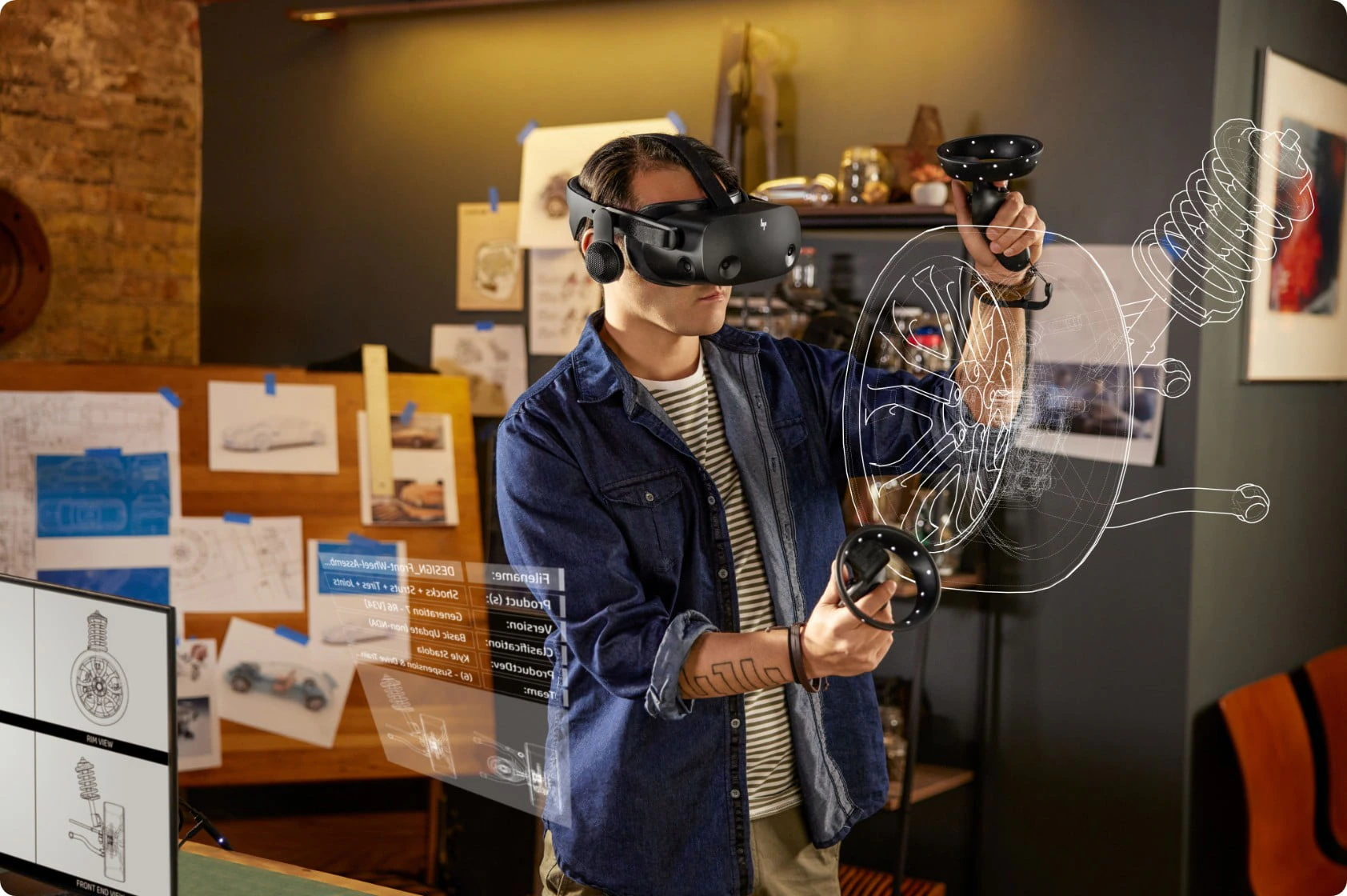
Virtual reality is the use of computer technology to create simulated environments. Virtual reality places the user inside a three-dimensional experience. Instead of viewing a screen in front of them, users are immersed in and interact with 3D worlds.
Simulation of human senses—all five of them—transforms a computer into a vehicle into new worlds. The only limitation to a superb VR experience is computing power and content availability.
We’ve only just begun the journey into mass-produced consumer headsets, used by businesses to present proposals and products to clients. AR is already popular in architecture and development, and not just with private developers. Local authorities and councils use this technology for town planning and sustainable development. AR doesn’t require a headset at this stage, so it’s extremely accessible, but I’d like to see AR and VR together in a headset in the future as this currently isn’t possible.
The three types of VR
Non-Immersive Virtual Reality: This category is
often overlooked as VR simply because it’s so common. Non-immersive
VR technology features a computer-generated virtual environment
where the user simultaneously remains aware and controlled by their
physical environment. Video games are a prime example of
non-immersive VR.
Semi-Immersive Virtual Reality: This type of VR
provides an experience partially based in a virtual environment.
This type of VR makes sense for educational and training purposes
with graphical computing and large projector systems, such as flight
simulators for pilot trainees.
Fully Immersive Virtual Reality:
Right now, there are no completely immersive VR technologies, but
advances are so swift that they may be right around the corner. This
type of VR generates the most realistic simulation experience, from
sight to sound to sometimes even olfactory sensations. Car racing
games are an example of immersive virtual reality that gives the
user the sensation of speed and driving skills. Developed for gaming
and other entertainment purposes, VR use in other sectors is
increasing.